
Export Packaging for Used Vehicles and Machinery: What Happens Before the Doors Close
Опубликовано · 9 мин чтения
When buyers hear "packaging" they picture cartons. Used vehicles and machinery are not boxed — but they are absolutely packaged, in a different sense: everything that protects the unit between our yard and your port, short of the container walls itself. Skip this work and the vehicle arrives needing a workshop visit before it can even be registered. This guide walks through what that preparation involves and why each step exists.
Preparation before anything is loaded
Every unit is cleaned inside and out before loading — not for looks, but because dirt hides leaks and because customs officers at some destinations open containers and a filthy unit invites a closer look. Then:
- Personal items and after-market loose fittings removed — a container full of loose cargo is a customs delay waiting to happen
- Fluids checked: coolant, brake fluid, oil topped to spec, any active leak fixed or documented before loading
- Fuel drained to a minimum — ocean carriers require low fuel for safety, and a full tank is also a fire and fume risk in a sealed box
- Battery disconnected and terminals protected
- Glass, mirrors and lights padded; mirrors folded in or removed and wrapped
Rust and moisture: the enemy nobody photographs
A container sailing to West Africa spends four to six weeks crossing humid ocean and then sits at a tropical port. Inside a sealed steel box, day-night temperature swings condense moisture onto every metal surface — this is why units can arrive with surface rust they did not leave with.
The countermeasures are simple and cheap, which is why skipping them is inexcusable: moisture-absorbing desiccant bags hung inside the cabin and cargo area, exposed machined surfaces and battery terminals coated, and drain holes checked so water cannot pool. For machinery, larger desiccant packs go inside the cab and any enclosed compartments.
Disassembly: when the machine has to come apart to ship
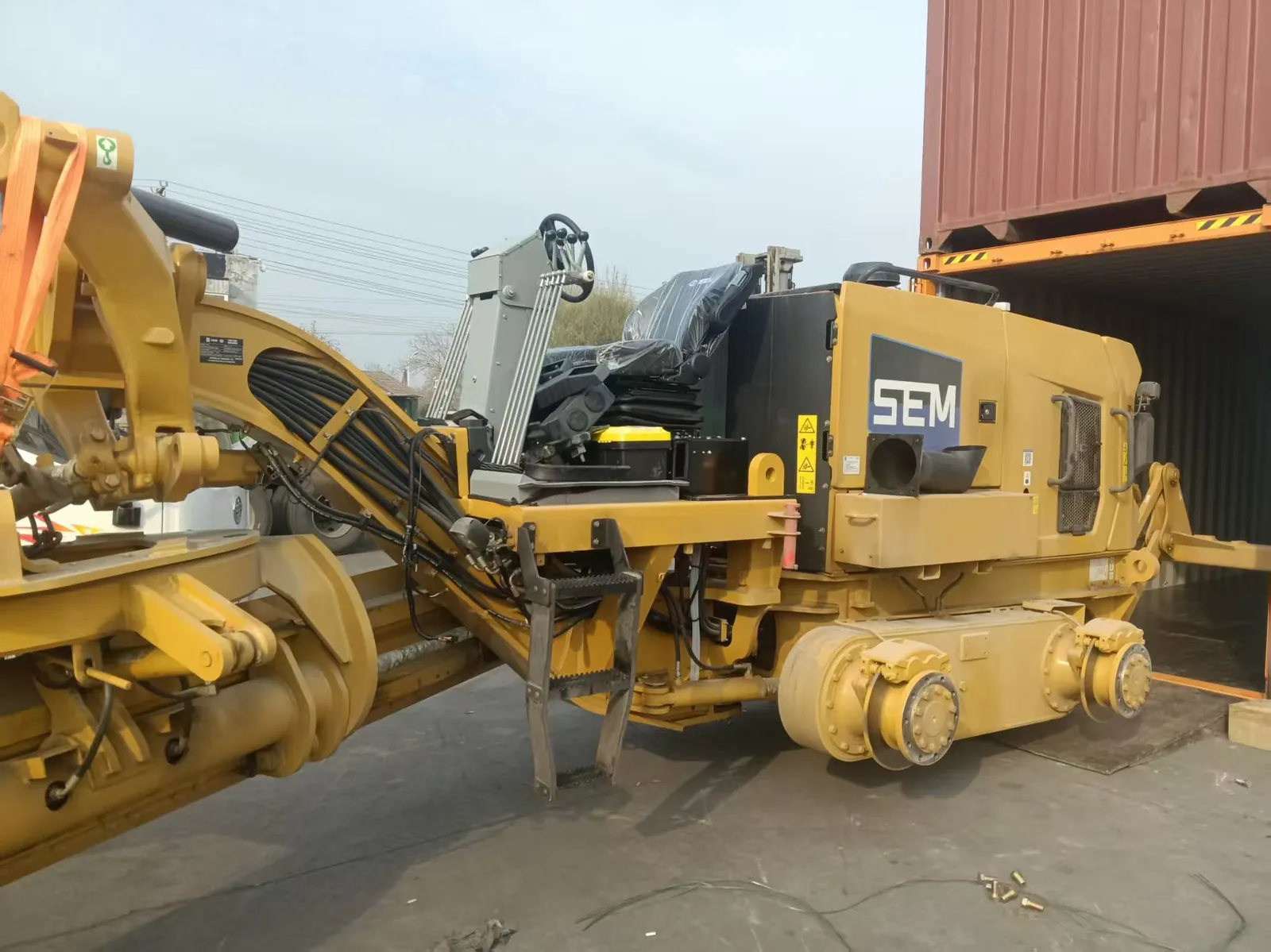
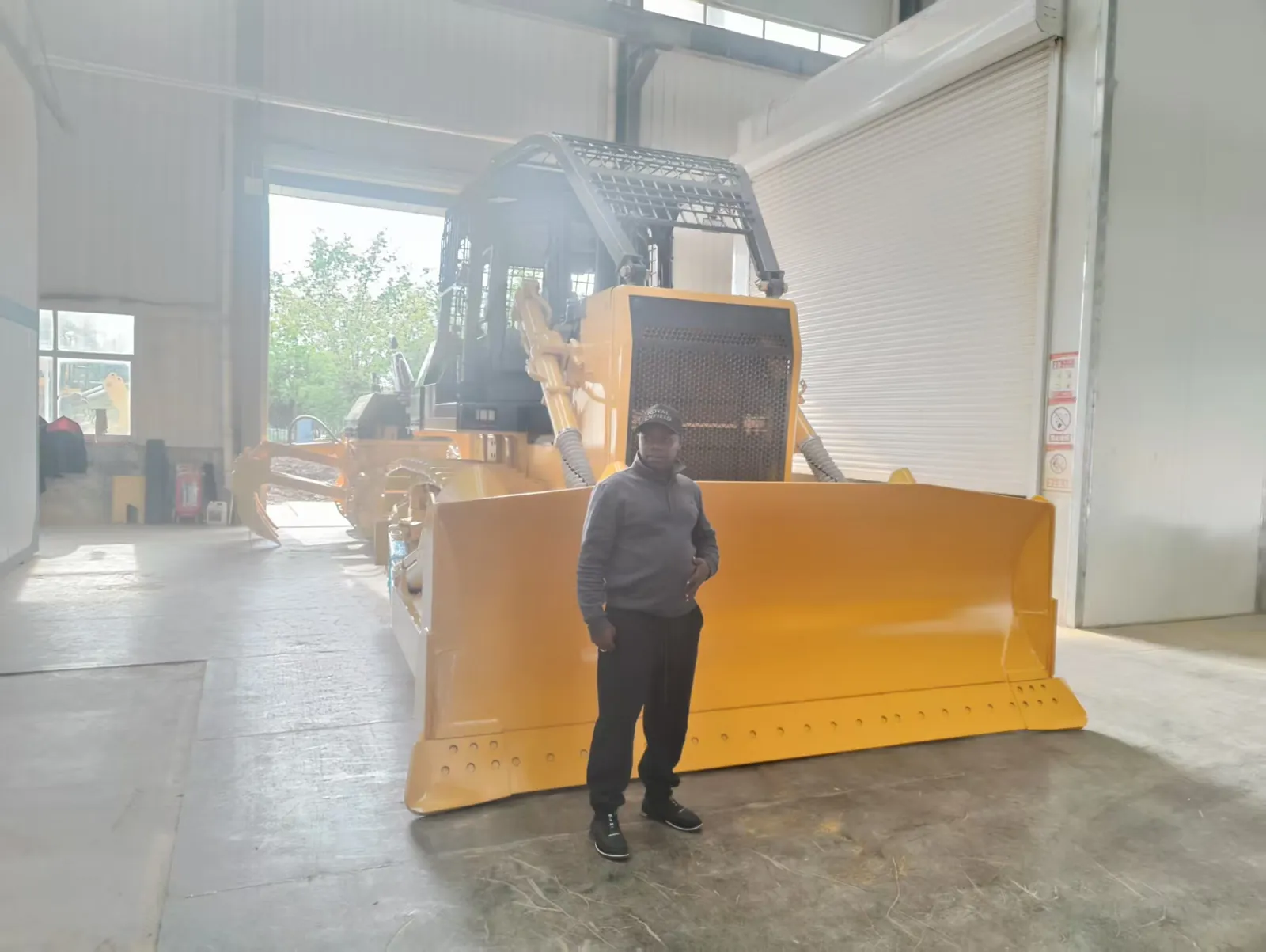
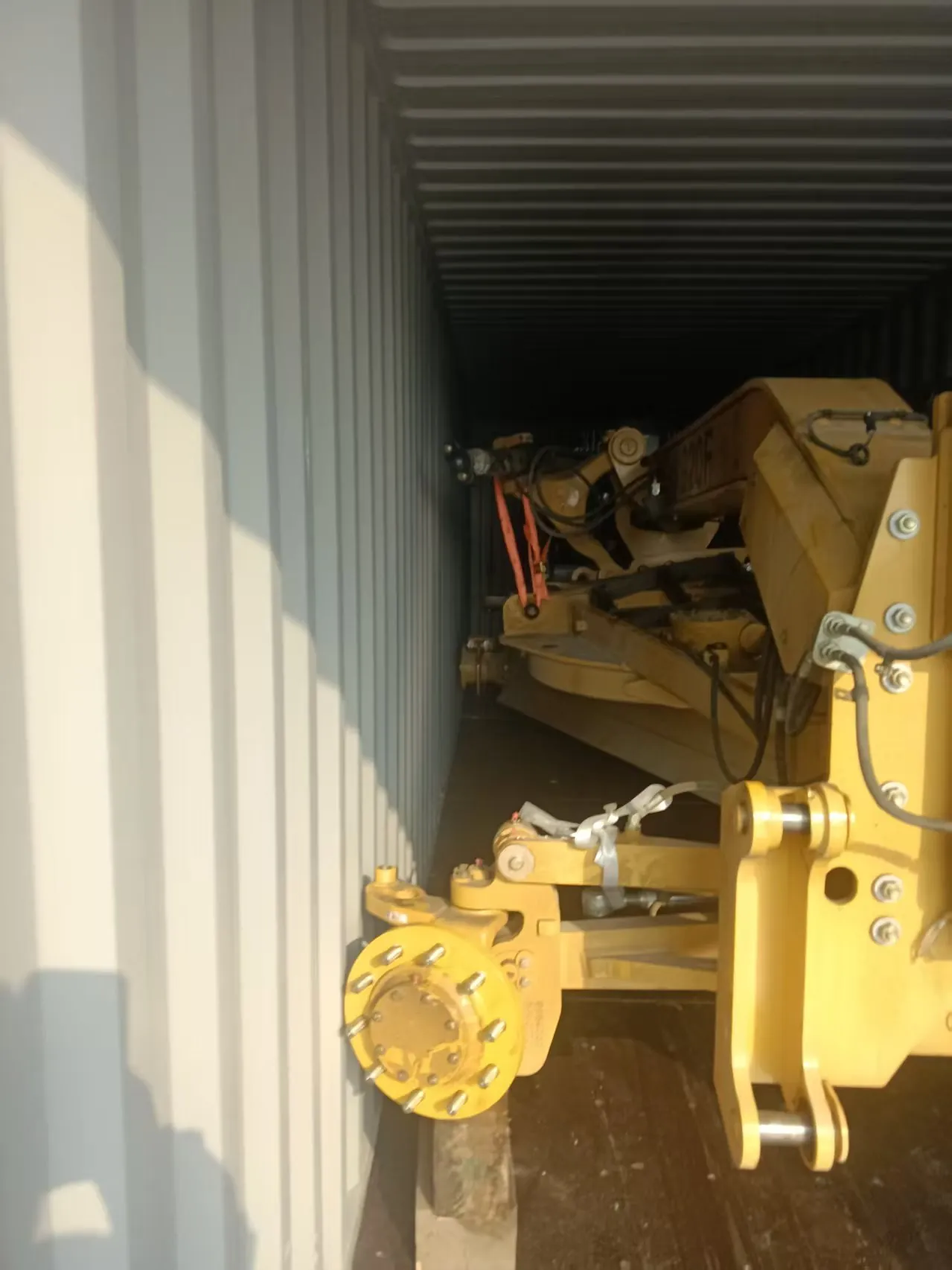
Some machines are simply wider, taller or longer than a container. A motor grader's blade and scarifier, large excavator booms, and articulated components are removed and shipped as separate lashed pieces inside the same container or on the same flat rack. This is engineering work, not rope work: disconnection points follow the manufacturer's service manual, hydraulic lines are capped the moment they are opened (a capped line keeps dirt out and stops oil bleeding across the container floor), and every removed part is tagged.
Disassembly is also documented. When a grader arrives in three pieces, the buyer receives photos of the machine before and after breakdown plus a packing list of what was removed — so reassembly at destination is a known job, not a puzzle.
Spare parts and tools travel with the shipment
When a buyer adds spare parts or tool kits to an order, they are packed in labelled boxes — part numbers and quantities on every face — and stowed inside the vehicle's cab or, for machinery, strapped to the machine inside the container. Parts packed loose in a container get stolen or crushed; parts boxed and stowed in a locked cab arrive. Heavier palletised items go on the container floor under the rack tier, lashed down like everything else.
The wood rule: ISPM-15
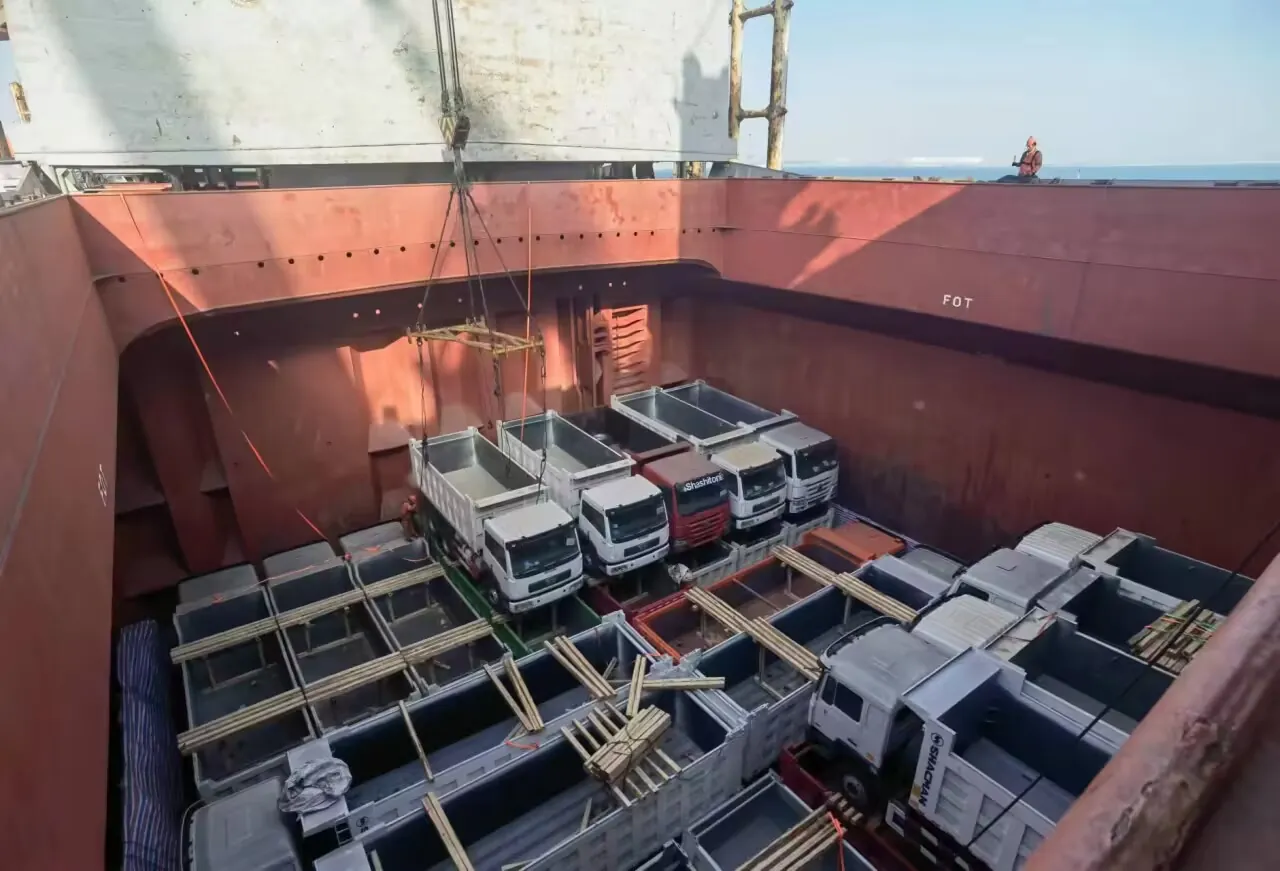
Every piece of timber that touches your shipment — chocks, rack beams, cradles, pallets — must carry the ISPM-15 stamp, the international standard for heat-treated or fumigated wood. Customs at most destinations rejects and re-processes shipments on untreated wood at the importer's cost, and the delay runs in weeks, not days. Ask any supplier whether their dunnage and racks are ISPM-15 certified; if they don't know the term, that tells you something.
What export packaging does not include
Honesty about limits: used vehicles are not shrink-wrapped whole (wrapping traps moisture against paint in a sealed container and does more harm than good), and "packaging" does not mean refurbishment — a scratched bumper travels scratched. The goal of packaging is that the unit arrives exactly as it left, not that it arrives newer than it left. Anything that must change before loading is done in the workshop and shown in the inspection photos first.
The checklist we work from
- Cleaned inside and out; loose items removed; fluids checked, fuel at minimum
- Battery disconnected, terminals protected, machined surfaces coated
- Glass, mirrors and lights padded; mirrors removed or folded
- Desiccant bags placed in cabin and compartments
- Disassembled parts capped, tagged and listed on the packing list
- Spare parts boxed, labelled and stowed inside the cab
- All timber ISPM-15 treated; chocks and straps verified before sealing
- Seal number photographed and recorded on the documents
PS AutoMart
Мы подбираем, проверяем и отправляем подержанные автобусы, грузовики и технику из Китая в порты Африки, Азии и Латинской Америки. Пришлите ваш запрос, и мы вернёмся с подборкой и полным расчётом стоимости до места назначения.
Читайте также
From Booking to Bill of Lading: How the Ocean Freight Leg Actually Works
Between the container leaving the yard and you collecting it at port lies the part nobody explains: booking, cut-offs, transshipment, the Bill of Lading and the fees that punish lateness.
11 мин чтенияHow Used Vehicles Are Loaded into Containers: Ramps, Racks and Lashing, Step by Step
Most transit damage is not bad luck — it is loading. How four sedans or three vans actually fit into a 40ft container, and what to check before the doors close.
10 мин чтенияFOB, CIF or C&F: What Each Price Actually Covers When You Import from China
Two quotes for the same truck can differ by thousands and neither seller is lying. They are quoting different things — and one of them is leaving the ocean freight to you.
6 мин чтения