
How to Import Used Vehicles from China to Kenya (2026 Guide)
Опубликовано · 9 мин чтения
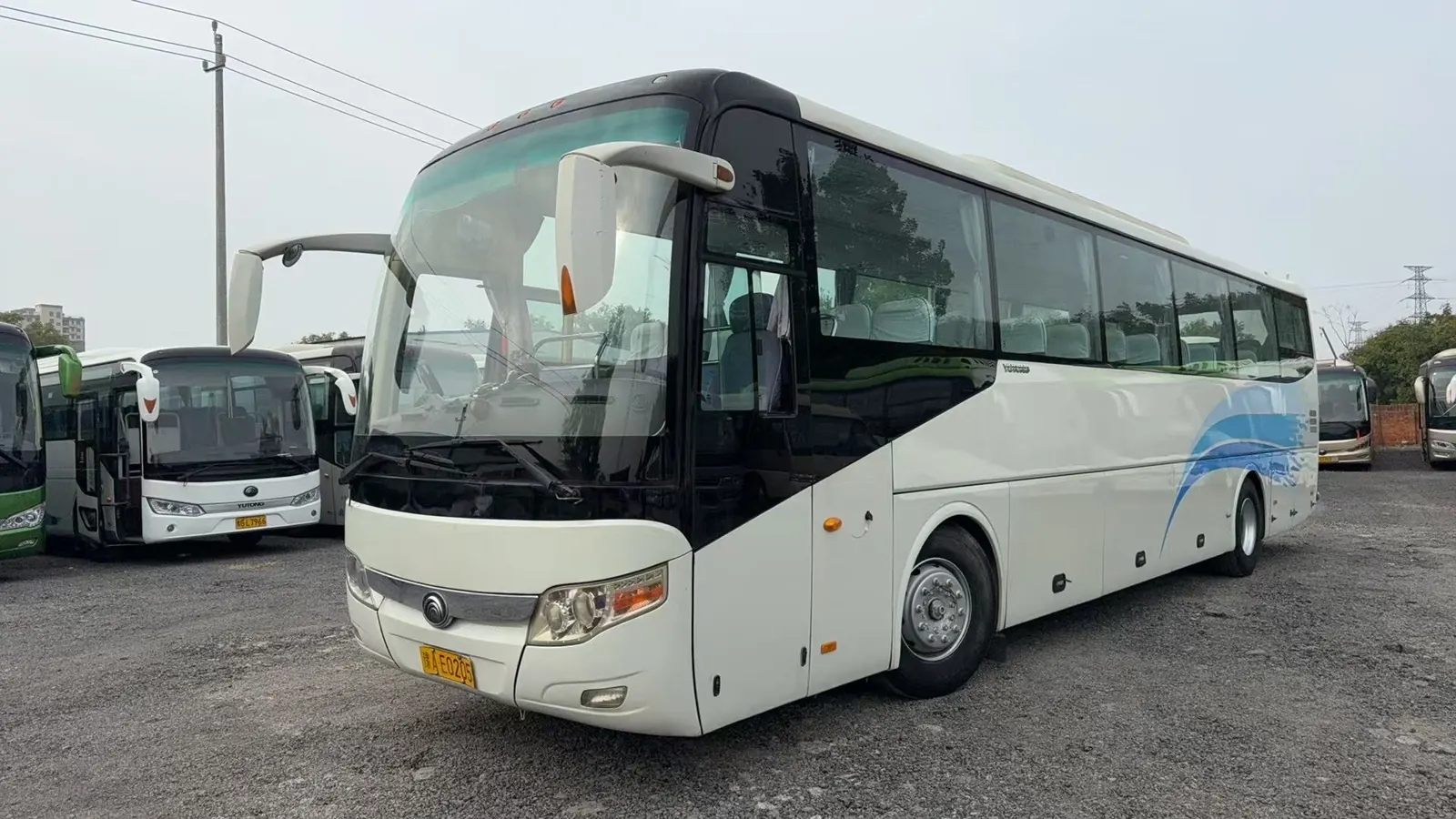
Kenya imports tens of thousands of used vehicles every year, the great majority through the port of Mombasa. Coaches for intercity and matatu operators, tippers and tractor heads for construction, and light trucks for distribution all move through Chinese ports toward Nairobi every month.
But Kenya is not a general-purpose used-vehicle market. Three requirements — steering side, vehicle age and a pre-shipment certificate — decide whether a unit is importable at all. This guide covers each in the order that actually matters.
1. Kenya is right-hand drive — and China is not
Kenya drives on the left, so only right-hand-drive vehicles can be registered. Mainland China drives on the right, and almost every vehicle in its domestic used stock is left-hand drive.
This is the single most important structural fact about this trade lane. It means RHD stock available from China comes from a narrower pool: vehicles built for RHD markets, units sourced through Hong Kong, or stock that entered China from Japan and similar markets. Volume is limited compared with LHD markets, and that has two consequences.
- Lead times are longer for specific RHD specs — plan your sourcing window accordingly rather than assuming immediate availability.
- Be sceptical of unusually cheap RHD volume. Converted LHD vehicles exist in the market and fail inspection on documentation grounds, not on looks.
- Verify the steering configuration against the original registration or export document, not against a photo of the dashboard.
2. The age limit is a gate, not a tax
Kenya enforces a maximum vehicle age at import, calculated from the year of first registration in the country of origin — not from the model year on the badge. As of writing, this effectively rules out the majority of stock older than roughly eight years, measured against the year the vehicle arrives.
The threshold is set by the Kenya Bureau of Standards and has been tightened more than once in recent years, so confirm the cut-off that applies to your arrival date before you commit to anything.
Unlike markets where an older vehicle simply costs more duty, an over-age unit in Kenya is refused. It cannot be made compliant by paying more tax. That is why age verification belongs at the top of your checklist, before price.
3. KEBS PVoC — the certificate must exist before the vessel sails
Every vehicle imported into Kenya requires a Certificate of Conformity issued under the KEBS Pre-Export Verification of Conformity programme. The inspection happens at origin, before shipment, and it is not something that can be arranged on arrival.
Independent inspection bodies accredited for this programme carry out the physical check and issue the certificate. The inspection covers the points you would expect — roadworthiness, brakes, lighting, steering and suspension, emissions, safety equipment — plus the age and steering-side eligibility checks.
Build this into your timeline. A unit that ships without a valid certificate sits at Mombasa accruing storage charges while the paperwork is resolved retrospectively, which is slower and more expensive than doing it properly at origin.
- Book the inspection before the shipping cut-off, not after — sailings to East Africa are not daily.
- Confirm which inspection body covers China-origin shipments and their current turnaround, which is measured in working days, not hours.
- The certificate is issued against the specific unit and its identifiers. A certificate for a similar vehicle is not a certificate for yours.
4. Documents to have in order before the car moves
Kenyan clearing runs on documents, and one missing item stalls everything. The Import Declaration Form in particular must be in place before the vessel sails from China — a vehicle on the water with no IDF is the most common self-inflicted delay in this trade.
| Document | Why it matters |
|---|---|
| Import Declaration Form (IDF) | Must exist before the vehicle leaves China; needed for customs entry |
| Importer KRA PIN | Your identity for the IDF and the customs entry |
| Certificate of Conformity | Issued at origin under the KEBS PVoC programme |
| Original registration / export certificate | Used to verify first-registration year and steering side |
| Bill of Lading | The key document at Mombasa; agree original vs telex release in advance |
| Commercial invoice and packing list | Entry paperwork, matched to the unit |
5. Shipping to Mombasa: RoRo or container
Almost all vehicle imports for Kenya discharge at Mombasa. The choice of method affects cost, transit time and how much handling risk you carry.
| Factor | RoRo | Container |
|---|---|---|
| Relative cost | Usually lower per unit | Higher for large or single units |
| Vehicle must run | Yes — it is driven on and off | No |
| Handling risk | More exposed on deck | Sealed and enclosed |
| Sailing frequency | Fewer, scheduled sailings | More frequent departures |
| Spare parts | Rarely space for them | Can ship parts in the same box |
6. What you actually pay at the destination
Kenyan customs assesses duty on the CIF value — vehicle price plus freight plus insurance — and applies several charges on different bases. The stack typically includes import duty, excise duty scaled by engine size, VAT, the Import Declaration Fee and the Railway Development Levy.
We do not print rate percentages in this guide. Kenyan rates and their bases are revised through the annual Finance Act, and a stale figure is worse than no figure. What matters is the method: your clearing agent should give you a written landed-cost estimate against the CIF value and the current Act before you commit.
- Tax is calculated on CIF, not on your FOB purchase price, so freight and insurance change your duty bill.
- Customs may value the vehicle against its own reference pricing rather than your invoice. Ask how your unit will be valued before you buy.
- Budget for storage from the moment the vessel berths — every day of paperwork delay costs money.
7. Specs that suit Kenyan operations
- Intercity coaches: prioritise highway gearing, luggage volume and seat count over city-duty manoeuvrability.
- Matatu and shuttle work: 14 to 33 seat minibuses with parts support that local mechanics already know.
- Construction: tippers matched to the material you actually haul, not the largest body available.
- Distribution: light and medium trucks with common engines — downtime costs more than purchase price in this segment.
- Spare parts: brands with a local parts presence are cheaper to keep on the road than a bargain unit with none.
Before you commit: verify these three
- Steering side — confirmed against the original registration document, not a photograph.
- First-registration year — confirmed against the current KEBS cut-off for your arrival date.
- Certificate of conformity pipeline — confirm the inspection can be completed before your sailing.
Rules change — verify before you buy
Age limits, certificate programmes and duty rates in Kenya are revised from time to time, usually through the Finance Act or a KEBS notice. This guide reflects the position as of its last update. Before you pay a deposit, confirm the current requirements with KEBS, KRA or a licensed Kenyan clearing agent.
Tell us your destination and arrival window and we will confirm the certification path and document set for your specific unit in writing, before you commit.
How we can help
We source, inspect and ship used buses, trucks and machinery from China. Send us your requirement — route, payload, seat count, budget — and we will send back a shortlist with a landed-cost estimate for Mombasa, including the export documents and certification path for your market.
PS AutoMart
Мы подбираем, проверяем и отправляем подержанные автобусы, грузовики и технику из Китая в порты Африки, Азии и Латинской Америки. Пришлите ваш запрос, и мы вернёмся с подборкой и полным расчётом стоимости до места назначения.