
How Used Vehicles Are Loaded into Containers: Ramps, Racks and Lashing, Step by Step
نُشر في · 10 دقيقة قراءة
When a buyer receives a vehicle with a cracked bumper or a scraped door that it did not have in the inspection photos, the cause is almost never the ocean — it is the loading. A container travels for weeks, gets lifted, stacked and swung, and anything not fixed inside it moves. This guide walks through how we load used vehicles into containers at our yard, what fits and what does not, and what a buyer should ask to see before the doors are sealed.
How much fits in a 40ft high cube
The standard workhorse for vehicle export is a 40-foot high cube container. Its internal space is roughly 12.0 m long, 2.35 m wide and 2.69 m high. That height is the reason the high cube, not the standard box, is used for vehicles: it leaves room for a second tier.
There is no single answer to "how many cars fit" — it depends on the vehicle. The table below is how we plan a load in practice.
| Vehicle type | Typical load in one 40HC | Loading notes |
|---|---|---|
| Sedans / compacts | 4 units (2 tiers × 2) | The classic full load; smaller hatchbacks can sometimes take a fifth on an end rack |
| SUVs | 3 units (2 tiers, front + rear stacked) | Height and tailgate shape decide whether 3 or 4 work |
| HiAce-type vans | 2–3 units | Usually 2 on the floor; a third only if roof accessories allow the clearance |
| Light trucks / pickups | 2 units | Loaded nose-to-tail, cabinets and bodies checked against the door frame |
| Heavy trucks / tractor heads | 1 unit | Fills the container on its own; wider loads go flat rack instead |
Two honest caveats. First, a supplier who promises one more unit than the space physically allows is squeezing the load — and squeezed loads are how windshields and mirrors break. Second, these numbers assume standard dimensions; a stretched vehicle or one with an oversized body changes the arithmetic.
Getting the vehicle in: ramp, not muscle
Vehicles are driven into the container up a steel loading ramp that brings the yard level up to the container floor. The container sits on a chassis so it stays level while each unit climbs in — a tilted container during loading is how transmissions and bumpers get ground-contact damage before the trip even starts.
Inside, clearance on each side is measured in centimetres. Drivers who load containers for a living walk the vehicle in on inch-by-inch mirror checks; this is a skill, and it is one of the quiet reasons an experienced yard loads without damage and an improvised one does not.
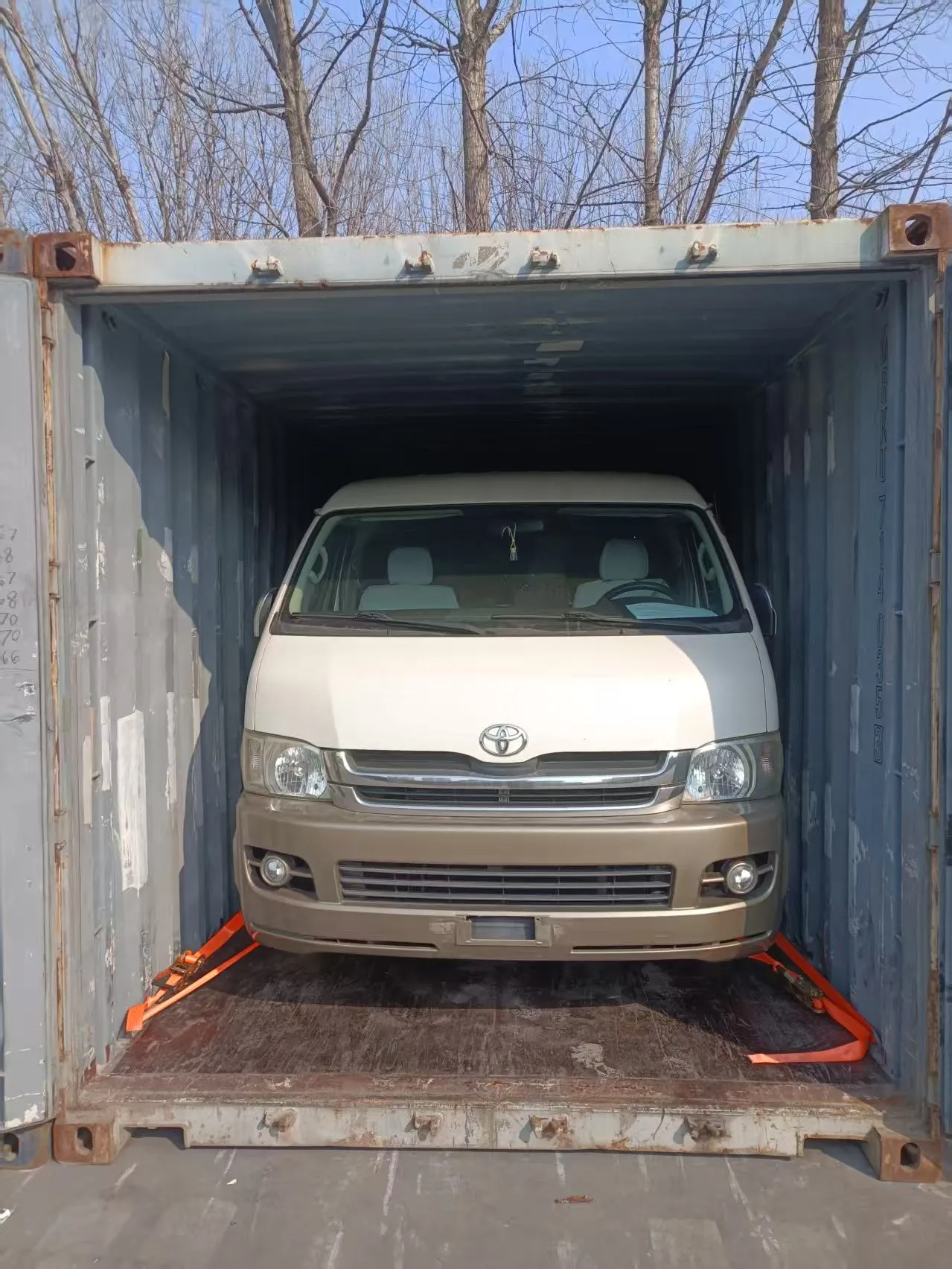
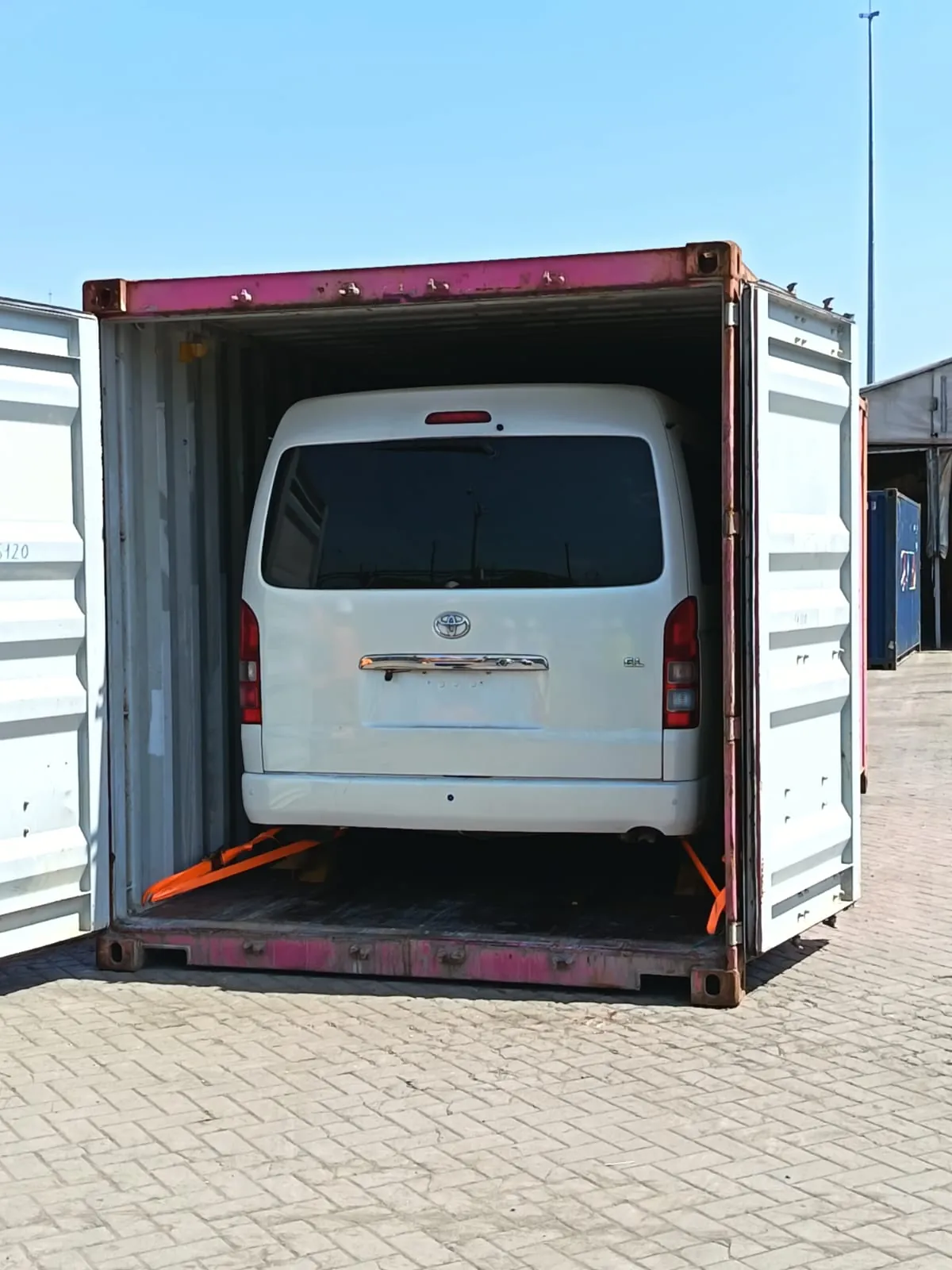
The wooden rack: how the second tier carries a car
A second tier needs a floor. We build a steel-and-timber rack across the container: upright posts are welded or bolted to the container's lashing rings, and timber beams span them to carry the upper vehicles' wheels. The rack is engineered around the specific vehicles going in — the span, the post positions and the timber section all follow from what stands on it.
Two rules matter here. The timber that touches the vehicle is deburred and padded, and every post connects to a rated lashing point on the container — a rack that leans on the container wall instead of the lashing rings will fold under braking forces at sea.
For buyers sourcing machinery rather than vehicles, the same principle scales up: our separate guide covers how excavators, loaders and graders are loaded and secured.
Securing: chocks, straps and the forces at sea
A ship does not move gently. Over an ocean passage a container sees braking forces, rolling, and sustained vibration, so everything inside is fixed against movement in all three directions:
- Timber wheel chocks nailed against every wheel, front and back, so nothing rolls
- Ratchet straps over the wheels or chassis down to the container's lashing rings — straps pull the vehicle down and in, chocks stop it rolling
- Wheel-to-deck contact verified for every unit on every tier; a wheel floating off its chock will hammer the rack for weeks
- Loose items (tools, spare tires, documentation pouches) stowed and strapped inside the cab — an unstrapped spare tire becomes a projectile
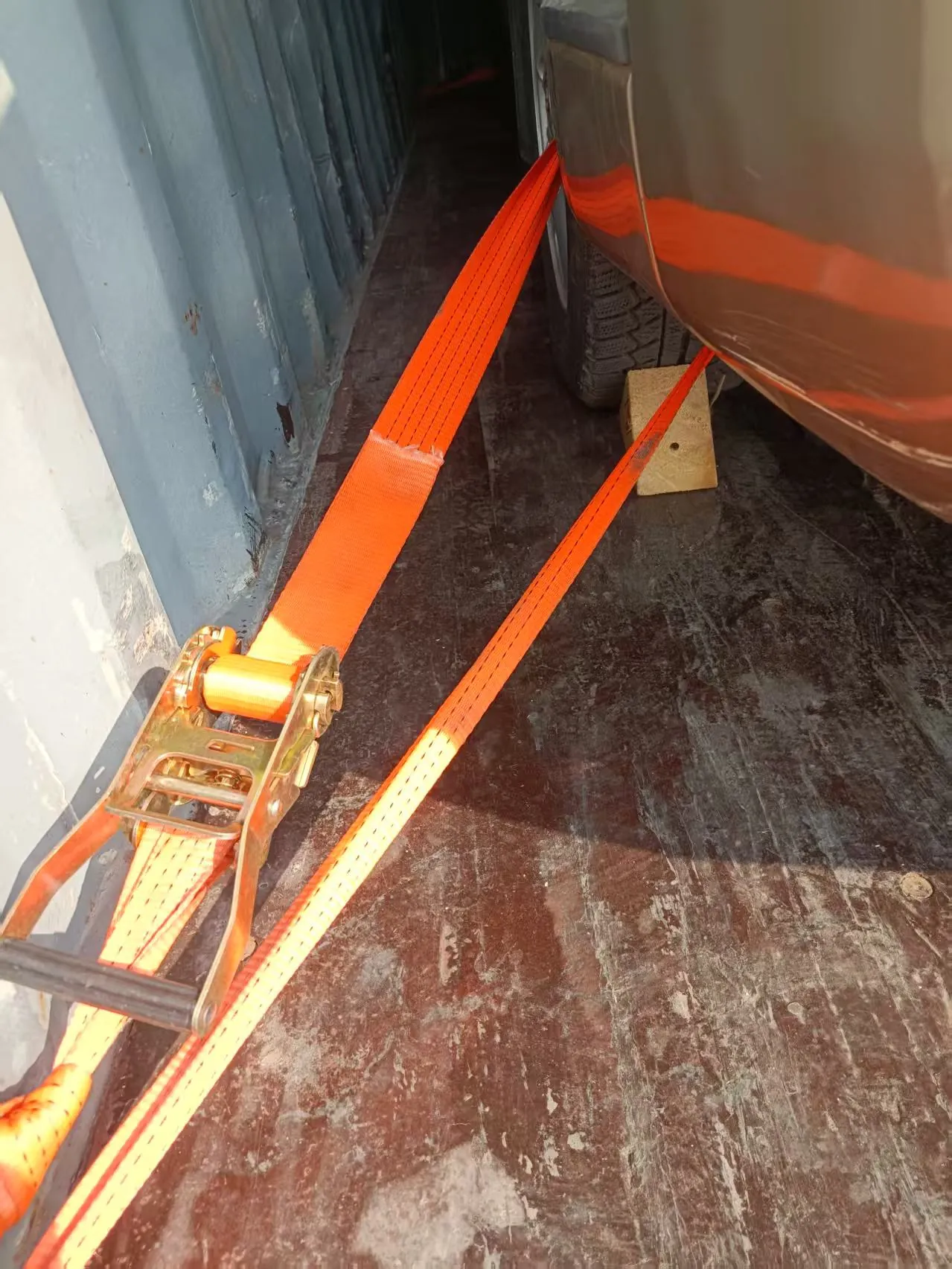
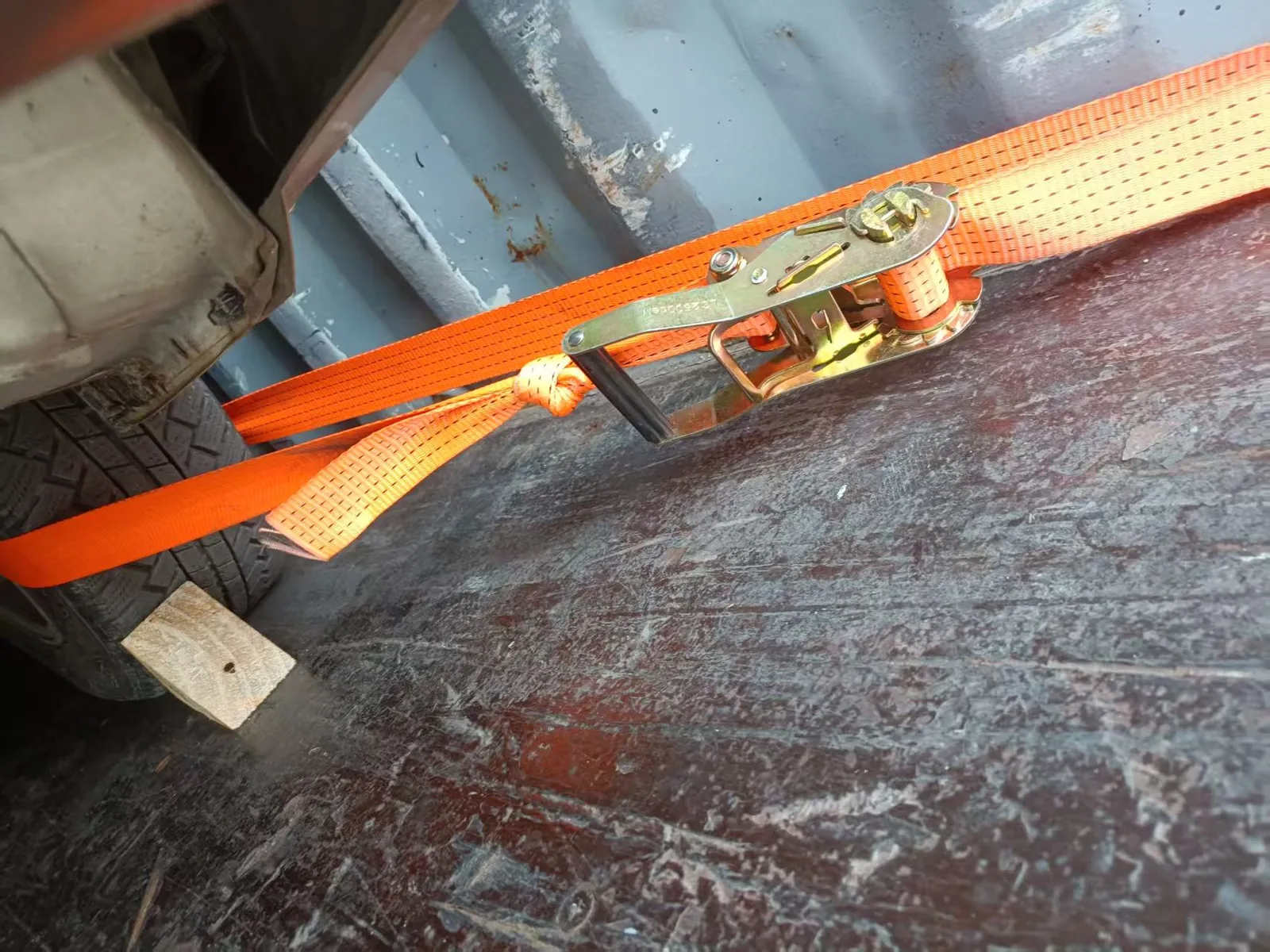
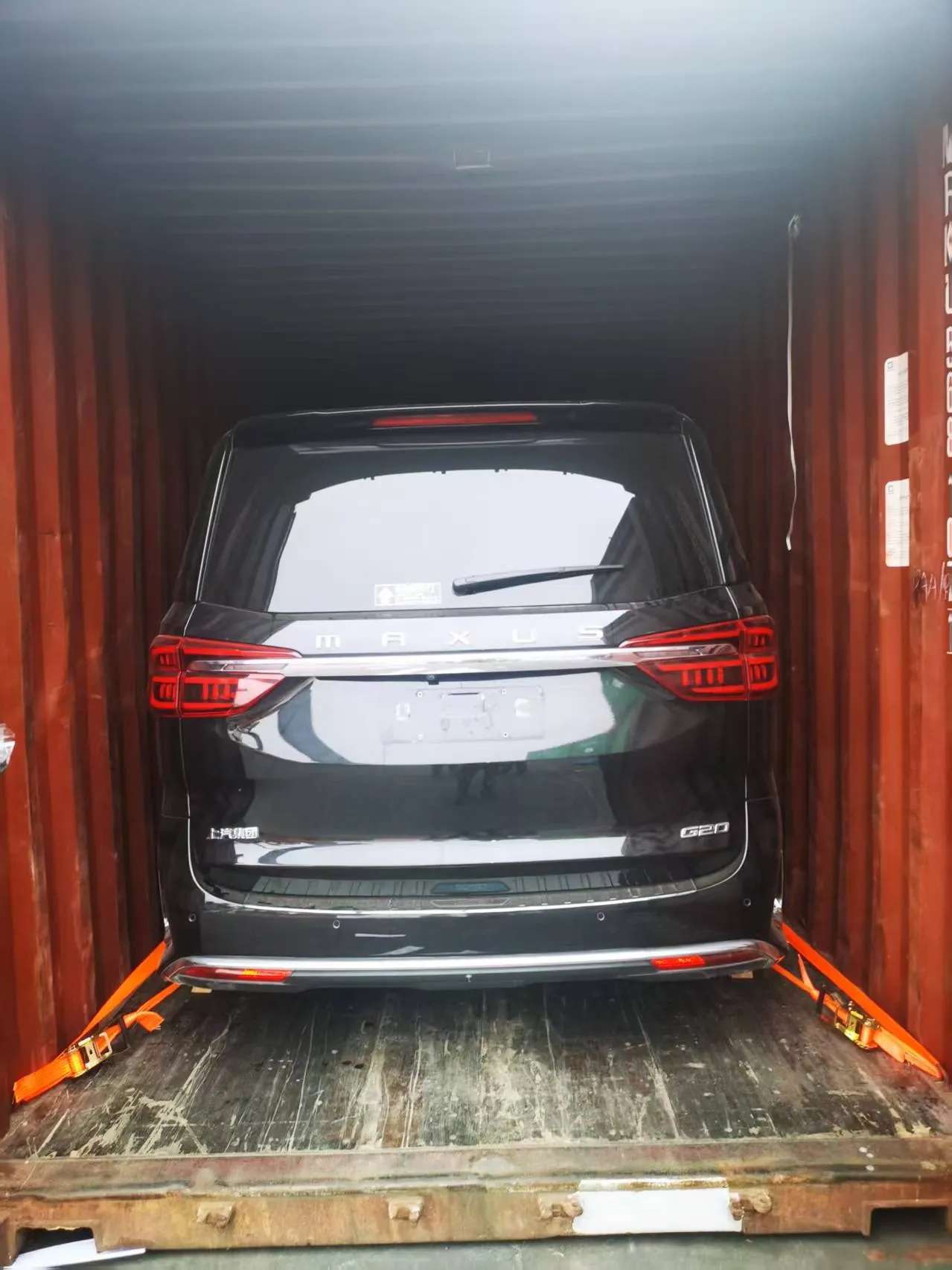
What we disconnect before the doors close
Before sealing, the battery is disconnected on every unit (a connected battery can drain flat or, worse, short during transit), fluid levels are checked for slow leaks that would pool on the container floor, and fuel is kept to a minimum for the ocean leg. Mirrors are folded or removed and wrapped. This takes minutes per vehicle and is the difference between a unit that starts at the destination port and one that needs a boost and a cleanup before it can even clear customs.
The photo record: what you should demand from any supplier
We photograph every load from three angles — the open container with vehicles positioned, the securing work (chocks and straps visible), and the closed doors with the seal number readable. The seal number matters: it must match the number on your Bill of Lading, and if the seal is broken on arrival, that is evidence the container was opened in transit and grounds for a survey before you sign anything.
If a supplier cannot show you loading photos with your vehicle in them, you are buying a description, not a shipment.
Questions to ask before you pay the balance
- How many units go in my container, and what are they? (Over-packing is the number one cause of transit damage)
- Will I receive loading photos with the seal number before the container leaves the yard?
- Who builds the rack, and is the timber treated to ISPM-15? (Untreated wood can be rejected at destination customs)
- Is the battery disconnected and are mirrors removed before sealing?
PS AutoMart
نقوم بتوريد وفحص وشحن الحافلات والشاحنات والآلات المستعملة من الصين إلى موانئ أفريقيا وآسيا وأمريكا اللاتينية. أرسل إلينا متطلباتك وسنعيد إليك قائمة مختارة مع تقدير كامل للتكلفة الواصلة.
اقرأ أيضاً
From Booking to Bill of Lading: How the Ocean Freight Leg Actually Works
Between the container leaving the yard and you collecting it at port lies the part nobody explains: booking, cut-offs, transshipment, the Bill of Lading and the fees that punish lateness.
11 دقيقة قراءةExport Packaging for Used Vehicles and Machinery: What Happens Before the Doors Close
Vehicles are not boxed, but they are still packaged — cleaned, drained, wrapped, disassembled and documented before a container or a ship's hold takes them. What that work involves.
9 دقيقة قراءةFOB, CIF or C&F: What Each Price Actually Covers When You Import from China
Two quotes for the same truck can differ by thousands and neither seller is lying. They are quoting different things — and one of them is leaving the ocean freight to you.
6 دقيقة قراءة