
From Booking to Bill of Lading: How the Ocean Freight Leg Actually Works
نُشر في · 11 دقيقة قراءة
Most first-time importers understand the beginning (choosing and inspecting a vehicle) and the end (clearing customs at home). The middle — the actual ocean leg — is a black box, and it is where deadlines, documents and avoidable fees live. This guide walks the leg step by step: what happens after loading, what each document means, and where the money is quietly lost.
The timeline, milestone by milestone
Two terms worth fixing now: ETD (estimated time of departure) and ETA (estimated time of arrival). Both are estimates — vessel schedules slip for weather, port congestion and backlog, and a realistic plan pads them rather than trusting them to the day.
| Milestone | What happens | What you receive |
|---|---|---|
| Booking | Space is reserved on a vessel for your container or RoRo slot | Booking confirmation with vessel name and voyage number |
| Gate-in / handover | The loaded container is delivered to the terminal before the cut-off date | Terminal receipt; loading photos with seal number |
| Cut-off | The hard deadline the terminal stops accepting cargo for that vessel — typically a few days before sailing | Nothing — missing it is the problem |
| Sailing (ETD) | The vessel departs the Chinese port | Shipped-on-board Bill of Lading |
| Transshipment (if any) | The container is transferred to a second vessel at a hub port | Updated tracking; same Bill of Lading |
| Arrival (ETA) | The vessel reaches your port | Arrival notice from the destination agent |
| Release | Freight is settled and the Bill of Lading is surrendered or telex-released | Delivery order — your key to collect the unit |
What loading onto the vessel looks like
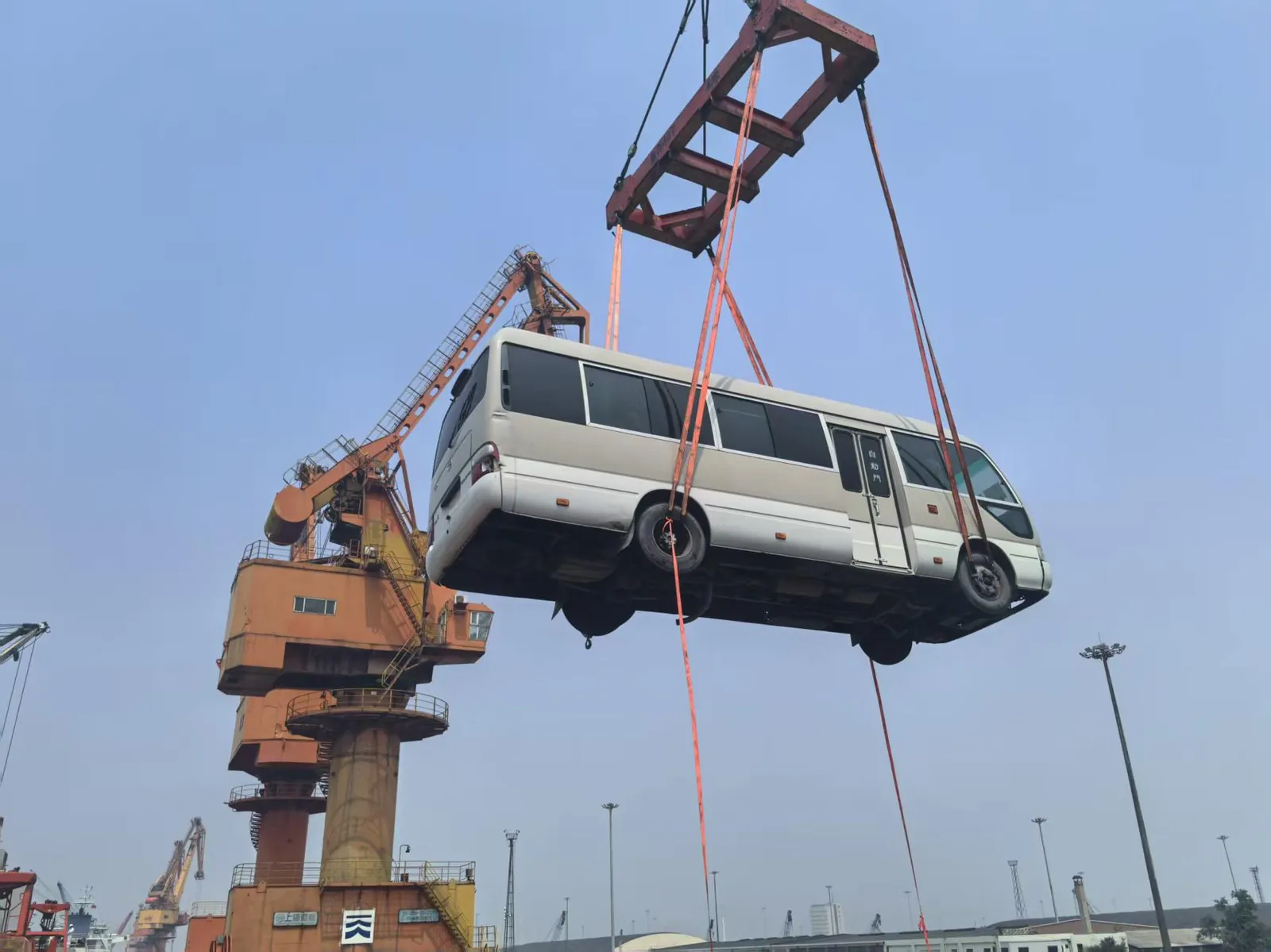
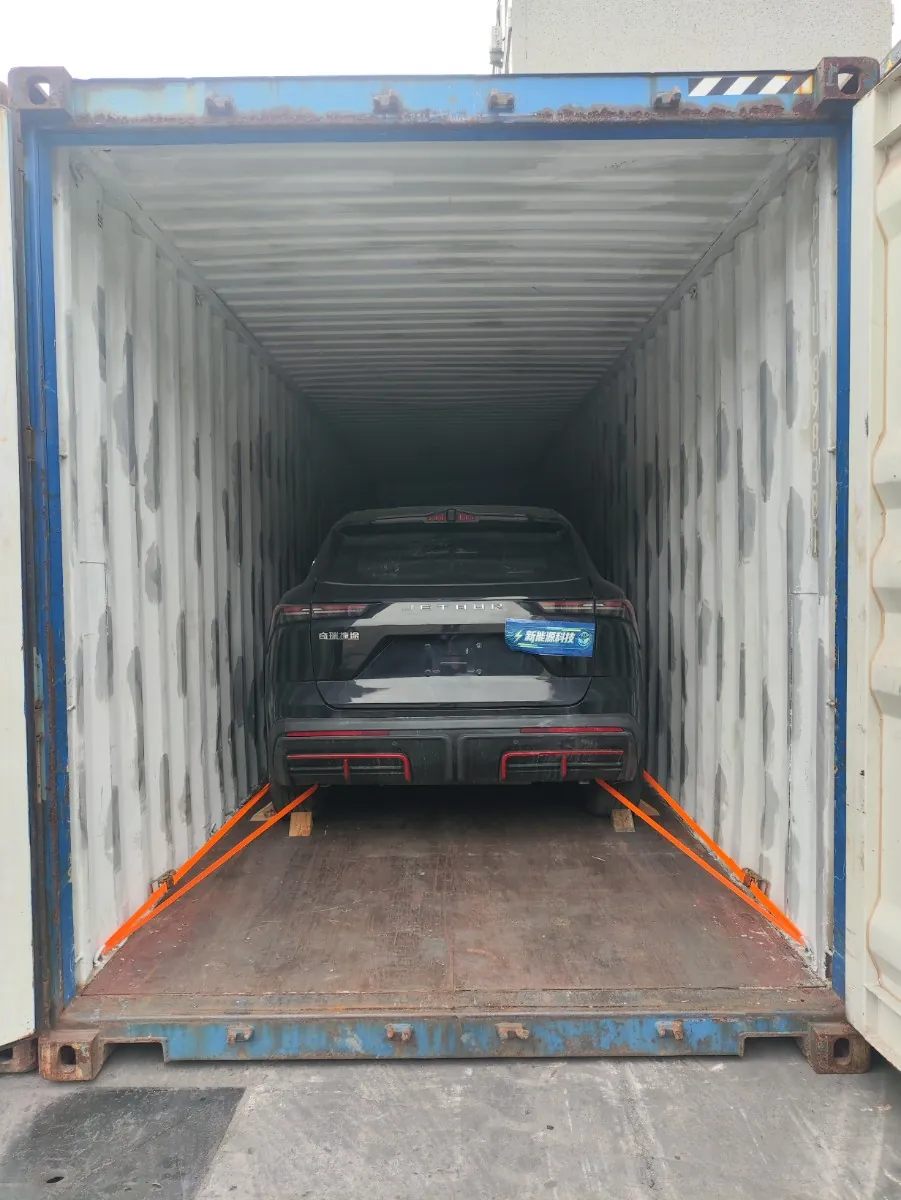
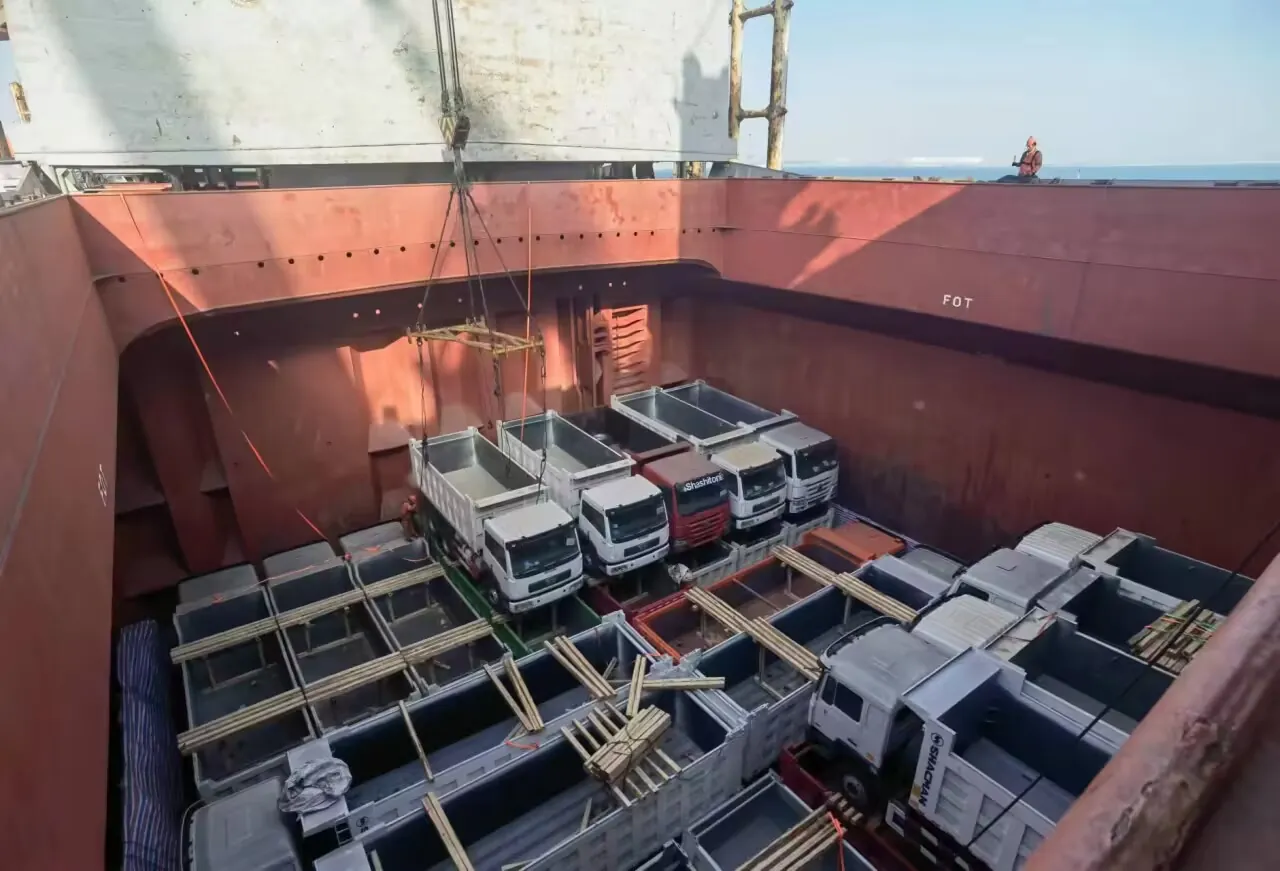
Container vessels are loaded by gantry crane: your sealed container is lifted from the terminal stack into the ship's cell structure, usually below deck, where it is locked into cell guides — it does not move relative to the ship. Once the hatch covers close, nobody touches your container until the destination port lifts it out the same way.
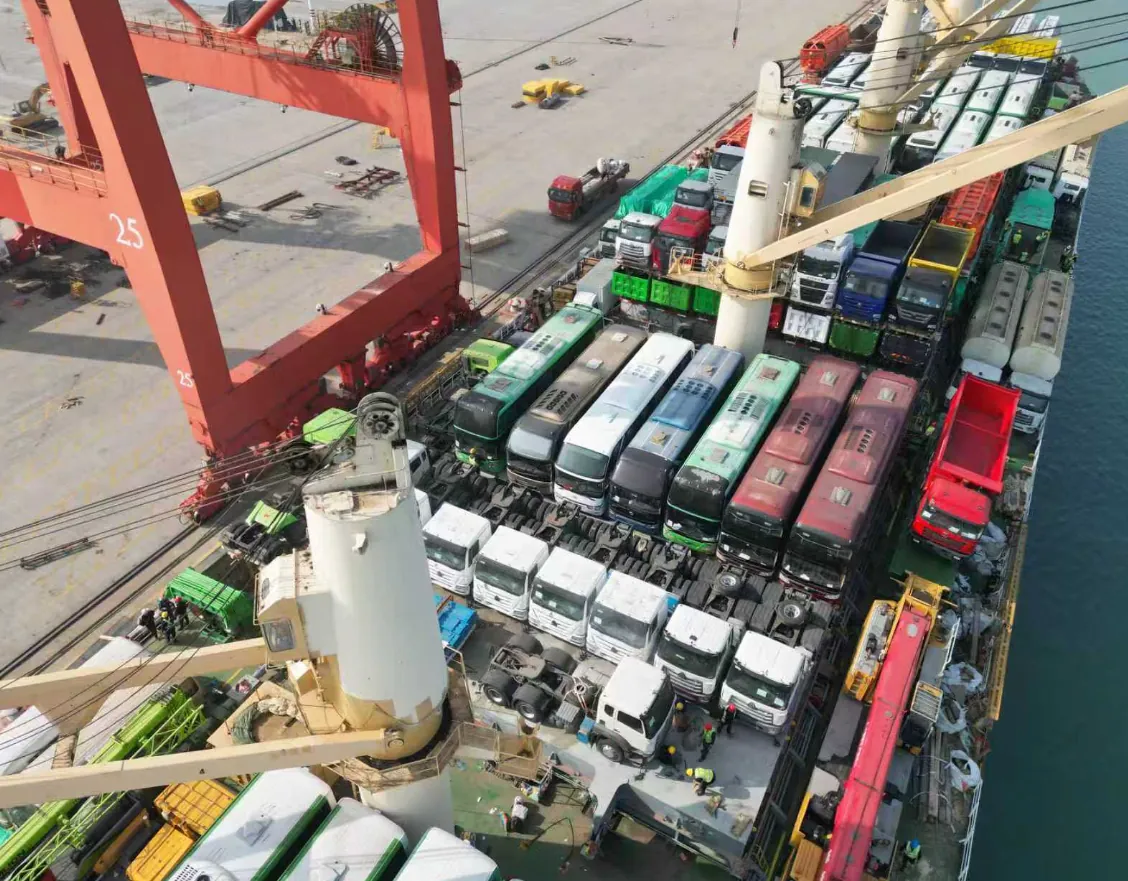
RoRo (roll-on/roll-off) vessels are the opposite: vehicles are driven up ramps into the ship's internal decks and lashed to the deck with straps and chains, then driven off at destination. For drivable units — a running bus, a truck that starts — RoRo means less handling; for non-runners, high-value units needing sealed privacy, or mixed loads where several vehicles share one shipment, containers win. Our overview guide compares the two methods and their costs in detail.
Direct or transshipped — and why it matters to you
Not every port has a direct service from China. Many shipments to smaller destinations transit a hub — Singapore, Colombo, Tangier or others — where the container is lifted off one vessel and onto another. Each transshipment adds handling time and a slip risk to the schedule; it does not add risk to the cargo itself, because the container stays sealed and the Bill of Lading covers the whole journey.
When comparing two suppliers' quotes, check which one is promising a direct service that may not exist and which is quoting an honest transshipped routing with a padded schedule. A realistic ETA you can plan around beats an optimistic one you cannot.
The Bill of Lading: the paper that is the vehicle
The Bill of Lading (B/L) is the single most important document in the shipment. It is simultaneously the carrier's receipt for your cargo, the contract of carriage, and — critically — the document of title: whoever controls the original B/L controls the vehicle. It carries the vessel and voyage, the ports, the container and seal numbers, and the consignee.
Two release methods exist. With an original B/L, the shipping line prints paper originals; you (or your bank, under a letter of credit) surrender one at destination to collect. With a telex release, the shipper surrenders the original at origin and the line releases cargo at destination against identity alone — no paper crosses the ocean, nothing can be lost in the post, and collection is faster. For most of our buyers, telex release is the simpler and safer choice; original B/Ls matter when a bank is financing the shipment and needs the paper.
Check your B/L copy when it is issued: the container and seal numbers must match the loading photos, and the consignee details must match the importer of record who will clear customs. An error caught before sailing is a correction; the same error caught at destination is a fee.
Arrival notice, free days, and the fees that punish lateness
When the vessel nears your port, the destination agent issues an arrival notice. From that point a clock runs: shipping lines grant a limited number of free days at the terminal (commonly a handful of days, set by the line and the port), and every day beyond them incurs demurrage — the terminal charging you for occupying its ground with your container. Separately, detention applies if the container itself is returned late. These charges accrue daily and they are entirely avoidable with one thing: preparing your customs documents before the vessel arrives, not after.
The practical playbook: get the arrival notice, start clearance immediately, and know your free-day count. An importer who clears inside the free days pays nothing extra; an importer who argues about paperwork for two weeks can rack up charges larger than the freight itself.
Tracking your shipment
The container number on your booking confirmation is the tracking key: the shipping line's own website shows the vessel position, transshipment events and the latest ETA. We also send clients milestone updates at sailing and arrival, with the B/L copy shared at departure. If a supplier cannot give you a container number and a vessel name after the ship has sailed, that is a red flag worth acting on.
Questions to ask before the ocean leg starts
- What is the vessel name, voyage number and the realistic (padded) ETA?
- Is the routing direct or transshipped, and through which hub?
- Will the B/L be telex released or issued as originals?
- What is the free-day allowance at my port, and who is the destination agent I will hear from?
PS AutoMart
نقوم بتوريد وفحص وشحن الحافلات والشاحنات والآلات المستعملة من الصين إلى موانئ أفريقيا وآسيا وأمريكا اللاتينية. أرسل إلينا متطلباتك وسنعيد إليك قائمة مختارة مع تقدير كامل للتكلفة الواصلة.
اقرأ أيضاً
Export Packaging for Used Vehicles and Machinery: What Happens Before the Doors Close
Vehicles are not boxed, but they are still packaged — cleaned, drained, wrapped, disassembled and documented before a container or a ship's hold takes them. What that work involves.
9 دقيقة قراءةHow Used Vehicles Are Loaded into Containers: Ramps, Racks and Lashing, Step by Step
Most transit damage is not bad luck — it is loading. How four sedans or three vans actually fit into a 40ft container, and what to check before the doors close.
10 دقيقة قراءةFOB, CIF or C&F: What Each Price Actually Covers When You Import from China
Two quotes for the same truck can differ by thousands and neither seller is lying. They are quoting different things — and one of them is leaving the ocean freight to you.
6 دقيقة قراءة